About the Lab
About Seoul Stem Cell Lab
The lab came out of the clinic. It was built to handle at cell level what 80,000 liposuction cases had already shown.
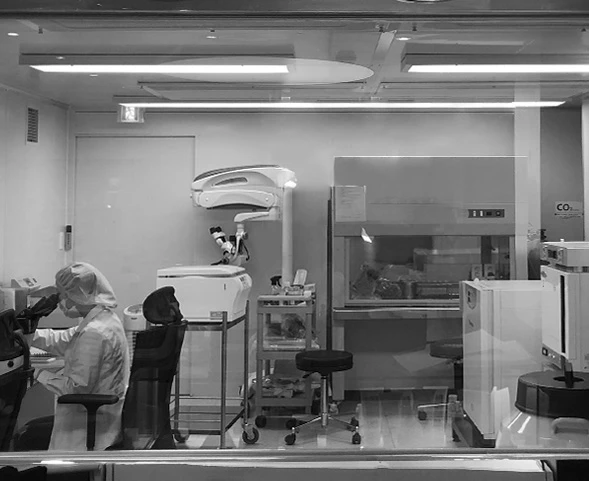
Seoul Stem Cell Lab is an in-house cell laboratory on the 5th floor of TheLINE Plastic Surgery in Gangnam, Seoul. It began with Dr Jaeho Cho, who was researching molecular biology at a university hospital from 1994 and started handling cells from adipose tissue directly once he moved to full-time liposuction practice in 2007. In 2023 the lab was recognised by Korea's Ministry of Science and ICT as a dedicated research and development department, and harvesting, isolation, purification and cryostorage are all handled in house with nothing outsourced.
The research came first
Dr Jaeho Cho, the lab director, has been researching molecular biology since 1994, while working at a university hospital. He received his doctorate in medicine from Kyung Hee University in 2003 and moved to full-time liposuction practice in 2007.
What repeated liposuction made obvious was simple. Even in the same person, the state of the living cells inside the tissue changes depending on which layer it is taken from, at what pressure, and through which cannula. Seeing that difference required a microscope, and acting on it required separation equipment inside the hospital. That is how the lab came about.
Harvesting is still done by the directing surgeons, who average 29 years in practice, rather than by a researcher. Cell quality is decided at harvesting, before any separation equipment is involved.
Four rules the lab keeps
The cells never leave the building
No sample is sent to an external cell processing facility. There is no temperature change and no waiting time in transit, and if a problem occurs we can trace which step it came from. Fat harvested in the 6th-floor operating room comes straight down to the 5th-floor lab.
Nothing is cultured
Isolated and purified cells are used as they are, not cultured to increase their number. Culturing and expanding autologous cells falls under a separate regulatory route in Korea, and Seoul Stem Cell Lab works inside that boundary.
We count before we treat
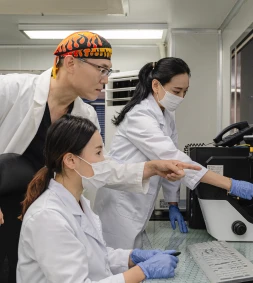
When isolation is finished, a cell counter gives the number and a microscope shows the condition. If the result falls below the standard, the treatment plan is adjusted there and then, and the patient is told.
We state the limits too
There is a range to what cell therapy can be expected to change. It does not apply to every condition, and it does not produce the same result in everyone. We do not give consultations that describe the benefit and leave out the limits.
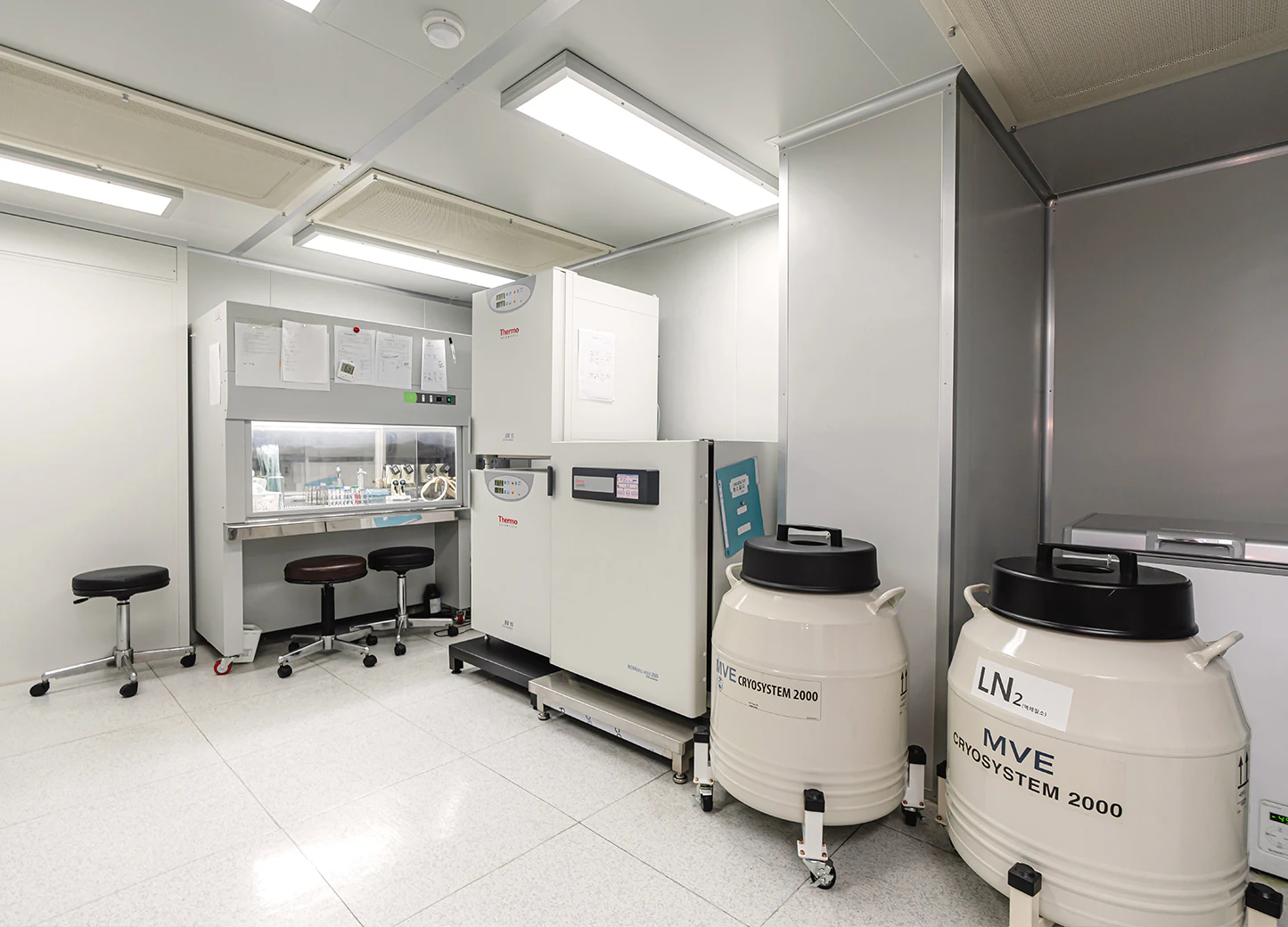
The whole 5th floor is the lab
Inside a clean zone managed with an air shower and HEPA filtration sit a double-filter clean bench, an incubator, a high-precision microscope, a cell counter and liquid nitrogen tanks. Every step that involves handling cells happens in this space.
See the equipment in detailThe lab in figures
These are the institution's own counts. Where a figure is counted differently, the basis is stated with it.
2023
The year the lab was recognised by the Ministry of Science and ICT as a dedicated research and development department.
45 minutes
The time the isolation and purification process takes to produce concentrated adipose-derived stem cells.
-196℃
The storage temperature inside the liquid nitrogen tanks.
80,000
Cumulative liposuction cases since 2007 (institution total).
29 years
The average operating experience of the two directors who harvest the cells.
24 hours
Stored cells are managed around the clock, with the tanks monitored continuously.
3 researchers
A senior researcher specialised in stem cells works on site, together with dedicated nursing researchers.
5th floor
Where the lab sits. Fat harvested on the 6th floor comes down one floor.
How the lab came to exist
The lab grew out of clinical practice. Here is the order it happened in.
| Year | Milestone |
|---|---|
| 1994 | Began molecular biology research while working at a university hospital |
| 2003 | Doctorate in medicine, Kyung Hee University |
| 2007 | Moved to full-time liposuction, accumulating clinical observation of adipose-derived cells |
| 2008 | Paper presented at the international congress co-hosted by the French and American plastic surgery societies |
| 2015 | Listed in the IBC world biographical directory (liposuction and long cannula development) |
| 2018 | Session chair, body contouring, autumn congress of the Korean Society of Aesthetic Surgery |
| 2023 | Recognised by the Ministry of Science and ICT as a dedicated research and development department |
Questions about the lab
How do I tell whether a clinic in Gangnam really has a stem cell lab?
Saying a lab exists and being registered as a research organisation by a government ministry are two different things. It is worth checking whether the clinic holds recognition as a corporate research institute or a dedicated research and development department, and in which year.
Seoul Stem Cell Lab was recognised as a dedicated research and development department by the Ministry of Science and ICT in 2023.
What difference does an in-house lab make compared with outsourcing?
Sending harvested tissue outside introduces temperature change and waiting time in transit, and makes it hard to trace which stage a problem came from.
At TheLINE Plastic Surgery, fat harvested in the 6th-floor operating room goes directly down to the 5th-floor lab.
Can I tour the facility?
The lab is an aseptically managed zone, so general access is restricted. During the consultation we explain the specifications and the process with photographs.
Does having a lab make the result better?
It does not guarantee a result. What it changes is that the conditions the cells were handled under can be checked and recorded. Without that record, there is no way to know whether what goes in today is the same as what went in last time.
Who works in the lab?
Dr Jaeho Cho, the lab director, oversees it, together with a senior researcher specialised in stem cells and dedicated nursing researchers. Harvesting is performed by the directing surgeons, who average 29 years in practice.